U.S. Social Security Death Index for Gary Louis Stagge
First Name: Gary
Middle Name: Louis
Last Name: Stagge
Name Suffix:
Birth Date: 8 January 1941
Social Security Number: 570-54-7946
Place of Issuance: California
Last Residence: Contra Costa, California
Zip Code of Last Residence: 94520
Death Date: 7 April 2009
Estimated Age at Death: 68
found on familysearch.org
Personal Record
Blessed 2 March, 1941, in Brigham City, Utah by Ira Mickael Schow (grandfather)
Baptized 7 May 1949 in Oakland, Alameda, California by Juel Reed Schow (uncle)
Ordained a Deacon by Merwyn Riddle on 25 April 1954 in Richmond, California
Ordained a Teacher 1 April 1956 in Concord, California
Married ChongCha Park June 1965 in Seoul, Korea by the American Embassy
found in genealogy book of Beth Schow Stagge
Thursday, January 26, 2012

Thursday, January 19, 2012
GEORGE PARMENTER 1492-1592
[Ancestral Link: Lura Minnie Parker (Stagge), daughter of Minnie May Elmer (Parker), daughter of Mark Alfred Elmer, son of William Elmer, son of Sarah Peake (Elmer), daughter of Lemuel Peake, son of Jonathan Peake, son of Hannah Leavens (Peake), daughter of Hannah Wood (Leavens), daughter of Mary Parmenter (Wood), daughter of John Parminter, son of William de Parmenter, son of George de Parmenter, son of George Parmenter.]
George Parmenter Jr.
1. George Parmenter Jr.1 was born about 1520. He died in 1591/2 in Little Yeldham, Essex, England. He was buried 7 May 1591/2 in Little Yeldham, Essex, England. He appears at Little Yeldham as George Parmenter, Jr., in the lay subsidy of 1542-1544 for Little Yeldham, along with another George Parmenter who was most likely his father. During his lifetime he held lands and goods in the villages of Ovington, Little Yeldham and Tilbury-Juxta-Clare. Records show a George Parmenter in the court rolls for Tilbury-Juxta-Clare in 1558 for assessments on the copyhold lands called Crenehouse and Richolds (E.R.O. ref. No. D/Du 432/4).
He must have lived in Ovington for a time, since at least two of his children were baptized at Ovington, and he is found in the lay subsidy of 1565-66 for Ovington (Parish Reg., Ovington and lay subsidy rolls, Public Record Office, London).
He next appears in the 1571-72 lay subsidy for Little Yeldham; and he was probably the brother of Robert Parmenter who was buried at Little Yeldham on May 1, 1594, and likely the brother to John Parmenter of Tilbury-Juxta-Clare who appears in the 1565-66 and 1571-72 lay subsidy rolls for that parish.
George was buried in the churchyard of Little Yeldham; and according to his will his wife, Alice, inherited his tenements and land in Little Yeldham, called Madges and Bushelyes, and his copyhold lands in Tilbury-Juxta-Clare. George Parmentr the elder of Over Yeldham in the county of Essex, yeoman, signed his will 8 May 1591 by mark, requesting burial in the churchyard there (a transcription of the will appears in the Register, 68(1914):262]
George Parmenter Jr. and Alice were married in England. Alice1 was buried on 23 August 1592 in Castle Hedingham, Essex, England. She died. Alice inherited her husband's property and lands. She died soon after George. She filed an affidavit with the court stating that she was unable to travel to Braintree, Essex, for the probate of George's will, due to health. Alice was buried in Castle Hedingham on 23 August 1592.
George Parmenter Jr. and Alice had the following children:
i.Robert Parmenter.
ii.Christian Parmenter.
iii.Katherine Parmenter.
iv.Richard Parmenter.
v.George Parmenter III.
vi.Alice Parmenter1 died by 1612.3 She was born in Essex, England.
vii.Joane Parmenter.
viii.Edward Parmenter.
ix.William Parmenter.
x.Elizabeth Parmenter1 was born in 1565 in England. She was christened on 27 July 1565 in Ovington, Essex, England. She died. Probably died young as she is not mentioned in the wills of her father or bothers.
found on ancestry.com
George Parmenter Jr.
1. George Parmenter Jr.1 was born about 1520. He died in 1591/2 in Little Yeldham, Essex, England. He was buried 7 May 1591/2 in Little Yeldham, Essex, England. He appears at Little Yeldham as George Parmenter, Jr., in the lay subsidy of 1542-1544 for Little Yeldham, along with another George Parmenter who was most likely his father. During his lifetime he held lands and goods in the villages of Ovington, Little Yeldham and Tilbury-Juxta-Clare. Records show a George Parmenter in the court rolls for Tilbury-Juxta-Clare in 1558 for assessments on the copyhold lands called Crenehouse and Richolds (E.R.O. ref. No. D/Du 432/4).
He must have lived in Ovington for a time, since at least two of his children were baptized at Ovington, and he is found in the lay subsidy of 1565-66 for Ovington (Parish Reg., Ovington and lay subsidy rolls, Public Record Office, London).
He next appears in the 1571-72 lay subsidy for Little Yeldham; and he was probably the brother of Robert Parmenter who was buried at Little Yeldham on May 1, 1594, and likely the brother to John Parmenter of Tilbury-Juxta-Clare who appears in the 1565-66 and 1571-72 lay subsidy rolls for that parish.
George was buried in the churchyard of Little Yeldham; and according to his will his wife, Alice, inherited his tenements and land in Little Yeldham, called Madges and Bushelyes, and his copyhold lands in Tilbury-Juxta-Clare. George Parmentr the elder of Over Yeldham in the county of Essex, yeoman, signed his will 8 May 1591 by mark, requesting burial in the churchyard there (a transcription of the will appears in the Register, 68(1914):262]
George Parmenter Jr. and Alice were married in England. Alice1 was buried on 23 August 1592 in Castle Hedingham, Essex, England. She died. Alice inherited her husband's property and lands. She died soon after George. She filed an affidavit with the court stating that she was unable to travel to Braintree, Essex, for the probate of George's will, due to health. Alice was buried in Castle Hedingham on 23 August 1592.
George Parmenter Jr. and Alice had the following children:
i.Robert Parmenter.
ii.Christian Parmenter.
iii.Katherine Parmenter.
iv.Richard Parmenter.
v.George Parmenter III.
vi.Alice Parmenter1 died by 1612.3 She was born in Essex, England.
vii.Joane Parmenter.
viii.Edward Parmenter.
ix.William Parmenter.
x.Elizabeth Parmenter1 was born in 1565 in England. She was christened on 27 July 1565 in Ovington, Essex, England. She died. Probably died young as she is not mentioned in the wills of her father or bothers.
found on ancestry.com
HENRY PAGE 1492
[Ancestral Link: Lura Minnie Parker (Stagge), daughter of Minnie May Elmer (Parker), daughter of Mark Alfred Elmer, son of William Elmer, son of John Elmer, son of Mary Kibbe (Elmer), daughter of Mary Pratt (Kibbe), daughter of Ebenezer Pratt, son of Ebenezer Pratt, son of Susannah Gleason (Pratt), daughter of Susanna Page (Gleason), daughter of John Page, son of Robert Page, son of John Page, son of Henry Page.]
ALSO FOUND ON MILLER-AANDERSON.BLOGSPOT.COM
HENRY - biographical information
He moved to Essex county and was married in 1520. He later returned to Wembley and his 3 children were born there. He had a coat of arms, which is the same still used by the family.
From History & Genealogy of the Page Family, p. 67. Source:RCKarnes site:DB:arciek
found on ancestry.com
ALSO FOUND ON MILLER-AANDERSON.BLOGSPOT.COM
HENRY - biographical information
He moved to Essex county and was married in 1520. He later returned to Wembley and his 3 children were born there. He had a coat of arms, which is the same still used by the family.
From History & Genealogy of the Page Family, p. 67. Source:RCKarnes site:DB:arciek
found on ancestry.com
JOHN PAGE 1521-1553
[Ancestral Link: Lura Minnie Parker (Stagge), daughter of Minnie May Elmer (Parker), daughter of Mark Alfred Elmer, son of William Elmer, son of John Elmer, son of Mary Kibbe (Elmer), daughter of Mary Pratt (Kibbe), daughter of Ebenezer Pratt, son of Ebenezer Pratt, son of Susannah Gleason (Pratt), daughter of Susanna Page (Gleason), daughter of John Page, son of Robert Page, son of John Page.]
ALSO FOUND ON MILLER-AANDERSON.BLOGSPOT.COM
 England, London, Harrow on the Hill
 England, St Mary, Harrow on the Hill, choir interior
 Lutine
 John Page and Audrey Redding marriage

England, St Mary's, Harrow on the Hill 12th century. There is a good possibility John worshiped here with his family. St Mary's is located in north-west London near Wembley.
ALSO FOUND ON MILLER-AANDERSON.BLOGSPOT.COM
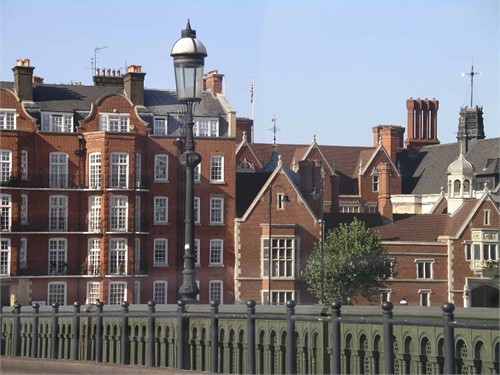 England, London, Harrow on the Hill
 England, St Mary, Harrow on the Hill, choir interior
 Lutine
 John Page and Audrey Redding marriage
England, St Mary's, Harrow on the Hill 12th century. There is a good possibility John worshiped here with his family. St Mary's is located in north-west London near Wembley.
1st Governor for Harrow School13 August 2001 , schoolarchivist@cwcom.net
Research from Rita Gibbs, School Archivist, that John Page of Wembley by Queen Elizabeth I granted him a Charter to found a free Boys School in 1572, he was appointed Governor until 1623. The school was not built until 1641 after the deaths of John and Joan Lyons. There was a Church School on the grounds of St Mary's Harrow on the Hill prior to 1641.
found on ancestry.com
Research from Rita Gibbs, School Archivist, that John Page of Wembley by Queen Elizabeth I granted him a Charter to found a free Boys School in 1572, he was appointed Governor until 1623. The school was not built until 1641 after the deaths of John and Joan Lyons. There was a Church School on the grounds of St Mary's Harrow on the Hill prior to 1641.
found on ancestry.com
JOHN FLEGG 1370
[Ancestral Link: Lura Minnie Parker (Stagge), daughter of Minnie May Elmer (Parker), daughter of Mark Alfred Elmer, son of William Elmer, son of John Elmer, son of Mary Kibbe (Elmer), daughter of Mary Pratt (Kibbe), daughter of Ebenezer Pratt, son of Mary Flagg (Pratt) daughter of John Bartholomew Thomas Flagg, son of Thomas Flegg, son of Allen Flegg, son of John Flegg, son of Richard Flegg, son of John Flegg, son of James Flegg, son of William Flegg, son of John Flegg.]
 The present Norman church, which has its origins in the 12th century, is set on falling ground to the west of the town. The churchyard contains the ancient monument of St Withburga's Well, supplied by a spring that is said to have issued forth from the burial place of Withburga, one of the four daughters of King Anna of East Anglia who reigned in the 7th century. Saint Withburga laid the foundation of a church and convent, the first Christian settlement in the area in the year 654. Points of interest within the church include the 'Seven Sacrament Font', made in 1488, which has the Church's sacraments carved on the sides, the eighth showing the crucifixion, the eagle lectern, made in Liege around 1475, beautiful Tudor ceilings in the north and south transept, painted in the 15th century and the burial place of the poet William Cowper (1731-1800)with the famous Cowper window sited above the tomb. The reredos (behind the high altar)was made in 1857 and painted in 1929.
Of the family of John10 Fleg, evidences have been found of only one
Child:
i. William11, born about 1400. (Ancestor of the Flaggs of America.)
found on ancestry.com
 The present Norman church, which has its origins in the 12th century, is set on falling ground to the west of the town. The churchyard contains the ancient monument of St Withburga's Well, supplied by a spring that is said to have issued forth from the burial place of Withburga, one of the four daughters of King Anna of East Anglia who reigned in the 7th century. Saint Withburga laid the foundation of a church and convent, the first Christian settlement in the area in the year 654. Points of interest within the church include the 'Seven Sacrament Font', made in 1488, which has the Church's sacraments carved on the sides, the eighth showing the crucifixion, the eagle lectern, made in Liege around 1475, beautiful Tudor ceilings in the north and south transept, painted in the 15th century and the burial place of the poet William Cowper (1731-1800)with the famous Cowper window sited above the tomb. The reredos (behind the high altar)was made in 1857 and painted in 1929.
The Flegg/Flagg FamilyAn ancient armigerous family of County Norfolk, England, deriving its name from the hundreds of East and West Flegg near Norwich. Records of the family go back to about 1120. For at least five generations it flourished as landed gentry.
For three successive generations, the heads of the family attained the honor of Knighthood, Arms Per pale in chief a label of five points. About 1280, Sir William de Fleg died without surviving male issue. His estates went to his daughters and the main line died out. Later generations bearing the family name descended from younger sons and sank to yeoman estate. Ancestors of the emigrant, Thomas Flegg can be traced with certainly only as far back as James Flegg, born about 1440. Alger DeFleg was born about 1115 in East Dereham, England. He died after 1160.
The family of De Flegg was seated in the latter part of the twelfth century in; the county of Norfolk, on the east coast of England, and bears the name of the Hundreds of East and West Flegg in that county, where they held grants in the reign of Henry II.
In the Southeastern corner of Norfolk there is a dense Danish settlement occupying the Hundreds of East and West Flegg (from the Norse word "flegg" or Danish "vlak", meaning flat), a space of some eight miles by seven, well protected on every side by the sea and the estuaries of the Bure and the Yare -- (From "Words and Places" by Isaac Taylor, 1885).
That the family was not of Saxon origin is indicated by their residence in this Danish settlement, their affiliations with Norman families so soon after the reign of William the Conqueror and their connection, in official positions, with the Roman Catholic Church. It is probable that they were either Danes or Norman-French, and took their name from the Danish Hundreds where they held grants of land, the Norman-French "de Flegg" meaning "of Flegg". In the reign of Henry II there were living two brothers, Alger de Flegg and Henry de Flegg. Henry was Prior of Norwich in 1168, and his brother Alger was living in 1160.
found on ancestry.com
The Flegg Pedigree 12 [John Fleg (1370-1422)]Page 414; Genealogical Notes on the Founding of New England: My Ancestors Part in that Undertaking
By Ernest Flagg
Published by Genealogical Pub. Co., 1973
ISBN 0806305339, 9780806305332
440 pages
Reprint of the 1926 ed.
12. John10 Fleg (11. John9, William8, Philip7, Philip6, Philip5, Sir John4, Sir John3, Henry2, Algar1), was born about 1370. It seems likely that he succeeded his father about 1395, as at a court of the Manor of Rougholme, held on the Friday before the Feast of St. Alphege, 19 Richard II [14 April 1396], Thomas de Bassingham, Chaplain, complains against John10 Fleg of East Dereham for refusal to pay for two acres of land in Scarning and East Bradenham an annual rental of 15s. 4d. rendered from time beyond memory to the chapel of St. Nicholas by the predecessors of John; verdict for plaintiff. Also at a court held on Friday after Easter, 10 Henry V [17 Apr. 1422], John10 Flegg appears and renders fealty to the lord for three-and-a-half roods of land in Scarning, late of Simon Manning.
By Ernest Flagg
Published by Genealogical Pub. Co., 1973
ISBN 0806305339, 9780806305332
440 pages
Reprint of the 1926 ed.
12. John10 Fleg (11. John9, William8, Philip7, Philip6, Philip5, Sir John4, Sir John3, Henry2, Algar1), was born about 1370. It seems likely that he succeeded his father about 1395, as at a court of the Manor of Rougholme, held on the Friday before the Feast of St. Alphege, 19 Richard II [14 April 1396], Thomas de Bassingham, Chaplain, complains against John10 Fleg of East Dereham for refusal to pay for two acres of land in Scarning and East Bradenham an annual rental of 15s. 4d. rendered from time beyond memory to the chapel of St. Nicholas by the predecessors of John; verdict for plaintiff. Also at a court held on Friday after Easter, 10 Henry V [17 Apr. 1422], John10 Flegg appears and renders fealty to the lord for three-and-a-half roods of land in Scarning, late of Simon Manning.
Of the family of John10 Fleg, evidences have been found of only one
Child:
i. William11, born about 1400. (Ancestor of the Flaggs of America.)
found on ancestry.com
WILLIAM FLEGG 1400
[Ancestral Link: Lura Minnie Parker (Stagge), daughter of Minnie May Elmer (Parker), daughter of Mark Alfred Elmer, son of William Elmer, son of John Elmer, son of Mary Kibbe (Elmer), daughter of Mary Pratt (Kibbe), daughter of Ebenezer Pratt, son of Mary Flagg (Pratt) daughter of John Bartholomew Thomas Flagg, son of Thomas Flegg, son of Allen Flegg, son of John Flegg, son of Richard Flegg, son of John Flegg, son of James Flegg, son of William Flegg.]
The Flegg Pedigree 13 [William Fleg (1400-1447)]
Pages 414-415; Genealogical Notes on the Founding of New England: My Ancestors Part in that Undertaking
By Ernest Flagg
Published by Genealogical Pub. Co., 1973
ISBN 0806305339, 9780806305332
440 pages
Reprint of the 1926 ed.
13. William11 Fleg (12 John10, John9, William8, Philip7, Philip6, Philip5, Sir John4, Sir John3, Henry2, Algar1), was born about 1400, probably in or near East Dereham, countyNorfolk. The earliest mention found of him is in October 1427, when he was plaintiff against Thomas Cusshon [Cushing] of East Dereham, baxter, in a plea of trespass; the sheriff reports that said Thomas has nothing by which he can be attached. Also said William11 Fleg in January 1427/8, was plaintiff against Geoffrey atte Hill, husbandman, late of Bircham Tofts, county Norfolk, in a plea of trespass. (Coram Rege Rolls, Michaelmas, 6 Henry VI, m. 35d. and Hilary, 6 Henry VI, m. 51d.)
At a court of the Manor or Rougholme, held on Friday after the Feast of St. Ambrose, 18 Henry VI [8 Apr. 1440], William11 Fleg was fined 4d. for breaking the lord’s pound and removing said William’s cattle impounded there. At a court held on Friday after Easter, 25 Henry VI [14 April 1447] the jurors report that out of court William11 Fleg surrendered, by the hands of John Nash and William Rede, to the use of John Wagstaffe, three-and-a-half roods of land in Scarning; said John renders fealty and is admitted tenant. (This parcel appears to be the one acquired in 1422 by John10 Fleg.)
Positive proof has not been found as to the issue of William11 Fleg; but circumstantial evidences indicate that he was father of the following
Children:
i. John12, born about 1430; became a priest and is mentioned as “Sir” John Flegg as early as 1456. During the fifteenth century and first half of the sixteenth century “Sir” was the customary title applied to priests, but it went out of use soon after the Reformation and accession of Elizabeth (1558), and was later succeeded by the term “Reverend”. He died unmarried before 1480, as masses for his soul were provided for in the will of that year of Sir William12 Flegg, priest, probably his brother.
ii. Margaret, born about 1433; is mentioned in the will of her brother Sir William12 Flegg, priest, in 1480.
iii. William, born about 1435; became a priest and was rector of Whepstead, county Suffolk, from 1460 until his death in 1481, unmarried. The will of Sir William Flegge, parson of Whepstead, dated 16 May 1480. To be buried in the chancel there. Masses for the souls of my father and mother, and of Sir Thomas Dereham and Sir John Flegge [priests]. My seven day to be kept at Bury St. Edmunds, my thirty day at Dereham [co. Norfolk], and my year day at Whepstead. To my sisters Margaret and Isabel, sheets, coverlets, and other household effects. To “my nevyn John, a bason and an ewyr of latton, two candlesticks of latton, an English boke of St. Edmund’s lyfe, and 20 shillings.” To “my nevyn William, half a garnish [set] of pewter dishes, a round pott, two candlesticks, and 40 shillings.” To Thomas Kusshon [Cushing] and Thomas Ede of Dereham, gowns, hoods, doublets, etc. “My nevews John and William to be found with my goods to skole at Cambridge to be priests; if they will not, then my goods to be spent in good deeds.” Executors, Roger Drury of Hawstead, Esq., and John Basse, draper, and John Parke, baker, of Bury St. Edmunds. Proved 4 June 1481. (Consistory of Norwich, vol. 16. fol. 87.) The mentions of Dereham in this will clearly point to the birthplace of the testator.
iv. Isabel, born about 1438; is mentioned in the will of her brother Sir William12 Flegg, priest, in 1480.
v. James12, born about 1440. (Ancestor of the Flaggs of America.)
found on ancestry.com
The Flegg Pedigree 13 [William Fleg (1400-1447)]
Pages 414-415; Genealogical Notes on the Founding of New England: My Ancestors Part in that Undertaking
By Ernest Flagg
Published by Genealogical Pub. Co., 1973
ISBN 0806305339, 9780806305332
440 pages
Reprint of the 1926 ed.
13. William11 Fleg (12 John10, John9, William8, Philip7, Philip6, Philip5, Sir John4, Sir John3, Henry2, Algar1), was born about 1400, probably in or near East Dereham, countyNorfolk. The earliest mention found of him is in October 1427, when he was plaintiff against Thomas Cusshon [Cushing] of East Dereham, baxter, in a plea of trespass; the sheriff reports that said Thomas has nothing by which he can be attached. Also said William11 Fleg in January 1427/8, was plaintiff against Geoffrey atte Hill, husbandman, late of Bircham Tofts, county Norfolk, in a plea of trespass. (Coram Rege Rolls, Michaelmas, 6 Henry VI, m. 35d. and Hilary, 6 Henry VI, m. 51d.)
At a court of the Manor or Rougholme, held on Friday after the Feast of St. Ambrose, 18 Henry VI [8 Apr. 1440], William11 Fleg was fined 4d. for breaking the lord’s pound and removing said William’s cattle impounded there. At a court held on Friday after Easter, 25 Henry VI [14 April 1447] the jurors report that out of court William11 Fleg surrendered, by the hands of John Nash and William Rede, to the use of John Wagstaffe, three-and-a-half roods of land in Scarning; said John renders fealty and is admitted tenant. (This parcel appears to be the one acquired in 1422 by John10 Fleg.)
Positive proof has not been found as to the issue of William11 Fleg; but circumstantial evidences indicate that he was father of the following
Children:
i. John12, born about 1430; became a priest and is mentioned as “Sir” John Flegg as early as 1456. During the fifteenth century and first half of the sixteenth century “Sir” was the customary title applied to priests, but it went out of use soon after the Reformation and accession of Elizabeth (1558), and was later succeeded by the term “Reverend”. He died unmarried before 1480, as masses for his soul were provided for in the will of that year of Sir William12 Flegg, priest, probably his brother.
ii. Margaret, born about 1433; is mentioned in the will of her brother Sir William12 Flegg, priest, in 1480.
iii. William, born about 1435; became a priest and was rector of Whepstead, county Suffolk, from 1460 until his death in 1481, unmarried. The will of Sir William Flegge, parson of Whepstead, dated 16 May 1480. To be buried in the chancel there. Masses for the souls of my father and mother, and of Sir Thomas Dereham and Sir John Flegge [priests]. My seven day to be kept at Bury St. Edmunds, my thirty day at Dereham [co. Norfolk], and my year day at Whepstead. To my sisters Margaret and Isabel, sheets, coverlets, and other household effects. To “my nevyn John, a bason and an ewyr of latton, two candlesticks of latton, an English boke of St. Edmund’s lyfe, and 20 shillings.” To “my nevyn William, half a garnish [set] of pewter dishes, a round pott, two candlesticks, and 40 shillings.” To Thomas Kusshon [Cushing] and Thomas Ede of Dereham, gowns, hoods, doublets, etc. “My nevews John and William to be found with my goods to skole at Cambridge to be priests; if they will not, then my goods to be spent in good deeds.” Executors, Roger Drury of Hawstead, Esq., and John Basse, draper, and John Parke, baker, of Bury St. Edmunds. Proved 4 June 1481. (Consistory of Norwich, vol. 16. fol. 87.) The mentions of Dereham in this will clearly point to the birthplace of the testator.
iv. Isabel, born about 1438; is mentioned in the will of her brother Sir William12 Flegg, priest, in 1480.
v. James12, born about 1440. (Ancestor of the Flaggs of America.)
found on ancestry.com
JAMES FLEGG 1440-1527
[Ancestral Link: Lura Minnie Parker (Stagge), daughter of Minnie May Elmer (Parker), daughter of Mark Alfred Elmer, son of William Elmer, son of John Elmer, son of Mary Kibbe (Elmer), daughter of Mary Pratt (Kibbe), daughter of Ebenezer Pratt, son of Mary Flagg (Pratt) daughter of John Bartholomew Thomas Flagg, son of Thomas Flegg, son of Allen Flegg, son of John Flegg, son of Richard Flegg, son of John Flegg, son of James Flegg.]

James FLEGG County Norfolk properties, County Norfolk, England
The Flegg Pedigree 14 [James Flegg (1440-1527)]Pages 415-417; Genealogical Notes on the Founding of New England: My Ancestors Part in that Undertaking
By Ernest Flagg
Published by Genealogical Pub. Co., 1973
ISBN 0806305339, 9780806305332
440 pages
Reprint of the 1926 ed.
14. James12 Flegg (13. William11, John10, John9, William8, Philip7, Philip6, Philip5, Sir John4, Sir John3, Henry2, Algar1), was born about 1440, probably in or near East Dereham, county Norfolk. The earliest mention found of him is at a court of the Manor of Rougholme, held on Friday after Easter, 22 Edward IV [12 Apr. 1482], when James Flegg was amerced 2d. for default of suit of court.
A complete examination of one term in each of the twenty-three regnal years of Edward IV (1461-1483), of the unindexed Coram Rege Rolls, failed to find any mention of this James12 Flegg; this one particular search required a whole week’s time at the Record Office in London, with fruitless results.
Over thirty years elapse before another glimpse is obtained of James12 Flegg. At a court of the Manor of Rougholme held on Friday after the Feast of St. Ambrose, 7 Henry VIII [11 April 1516], Thomas Dany appears and renders fealty to the lord for a parcel of free land in Skerning [Scarning] late of James Flegge and previously of John Wagstaff. (This piece of land was probably the same one conveyed in 1447 to a John Wagstaff by William11 Flegg.)
In June or July, 1522, James12 Flegge of East Bradenham, county Norfolk, yeoman, was summoned to answer Robert Sylvester of Little Ryburgh [county Norfolk], yeoman, in a plea that said James pay £20 he owes said Robert, but unjustly detains, whereof said Robert claims that on 29 August, 12 Henry VIII [1520], by his bond of obligation agreed to pay said £20 at the following Feast of the Annunciation [25 March 1521]. James Flegge appears and desires to hear said bond read, and having heard it, begs for postponement until the Octaves of Michaelmas next [6 October 1522]. (Common Pleas Rolls, Roll 1036, Trinity, 14 Henry VIII, m. 137d.)
In 1523, Parliament granted to Henry VIII a subsidy of such a nature that practically all householders were assessed and even servants were taxed on their wages. In the roll for South Greenhoe Hundred, county Norfolk, among the twenty-eight persons assessed at East Bradenham appears “Jamys Flegge in goodya iij li; [tax] xviijd.” This James12 Flegg paid the largest assessment in his parish, and was the only Flegg listed in the whole Hundred. (Lay Subsidy, Norfolk, 15 Henry VIII, 150-205.)
The will of “James Flegg of Est Bradenham,” of hoole minde and good remembrance.” My soul to Almighty God, our Lady of St. Mary, and all the blessed company of heaven, and my body to be buried in the churchyard of East Bradenham. To the high altar there 2s., to the reparation of the church 6s. 8d., to the common light one pound of wax, and to the torches 6d. To the reparation of the highways in East Bradenham 6s. 8d. To the “Austin Fryers, Black Fryers, and Grey Fryers in Norwich, to eche of them 12d., and to the gylde of St. John in Shipdham 12d.” To my son John 20s. To each of my three daughters 13s. 4d. to be paid as it may be borne of my goods. I will that all my howsing and landys’ be sold by my executrix, that my debts and legacies be paid, and that the residue be disposed for the good of my soul. My feofees to make estate in my messuages [dwellings] and lands when required. All residue of my goods [personal estate] to my wife Margaret, executrix, she to see my body brought honestly [honorably] to the earth. Proved 1 July 1527. (Archdeaconry of Norfolk, vol. for 1524-1531, fol. 6.) The testator was doubtless over eighty-five years of age when this will was made. At that period real estate could not be directly devised by will, so it was then customary for a landholder to deed his land to feofees [ or trustees] for his own use for life, with specified remainders, after his death, to his wife and children; the clause in this will referring to his feofees shows that he had made such a settlement of most of his land-holdings, which accounts for the small bequests in his will to his children. It should also be noted that money at that time had a purchasing power of at least thirty times its present value.
The records gleaned of James12 Flegg indicates that he was a prosperous yeoman of substantial estate in East Dereham, Scarning, East Bradenham and Shipdham. His long extended life was passed in the reigns of six sovereigns, Henry VI (1422-1461), Edward IV (1461-1483), Edward V (1483), Richard III (1483-1485), Henry VII (1485-1509), and Henry VIII (1509-1546). He thus witnessed the famous War of the Roses (1455-1485) so disastrous to the old feudal nobility of England, and the despotic but efficient rules of Henry VII and Henry VIII, under whom the country became prosperous by freedom from civil wars and a great increase in manufacturing and foreign commerce; this period was also marked by extensive rebuilding throughout England.
James12 Flegg died in East Bradenham in 1527, aged over eight-five years. From his time “Fleg” is the most usual spelling of the family name, and ample records exist to trace most of his descendants of the name for seven generations, or down to nearly 1700.
He married about 1465, Margaret ----- who survived him.
Children:
i. John13, born about 1465. (Ancestor of the Flaggs of America.)
ii. William, born about 1470; mentioned in the will in 1480 of his uncle, Sir [Rev.] William12 Flegg, who left him means to attend Cambridge University to be educated for priesthood. His further history has not been learned.
iii. v. Three Daughters (names unknown), mentioned but not named in the will of their father.
Added by BlueRibbon78681 on 23 November 2008
found on ancestry.com

James FLEGG County Norfolk properties, County Norfolk, England
The Flegg Pedigree 14 [James Flegg (1440-1527)]Pages 415-417; Genealogical Notes on the Founding of New England: My Ancestors Part in that Undertaking
By Ernest Flagg
Published by Genealogical Pub. Co., 1973
ISBN 0806305339, 9780806305332
440 pages
Reprint of the 1926 ed.
14. James12 Flegg (13. William11, John10, John9, William8, Philip7, Philip6, Philip5, Sir John4, Sir John3, Henry2, Algar1), was born about 1440, probably in or near East Dereham, county Norfolk. The earliest mention found of him is at a court of the Manor of Rougholme, held on Friday after Easter, 22 Edward IV [12 Apr. 1482], when James Flegg was amerced 2d. for default of suit of court.
A complete examination of one term in each of the twenty-three regnal years of Edward IV (1461-1483), of the unindexed Coram Rege Rolls, failed to find any mention of this James12 Flegg; this one particular search required a whole week’s time at the Record Office in London, with fruitless results.
Over thirty years elapse before another glimpse is obtained of James12 Flegg. At a court of the Manor of Rougholme held on Friday after the Feast of St. Ambrose, 7 Henry VIII [11 April 1516], Thomas Dany appears and renders fealty to the lord for a parcel of free land in Skerning [Scarning] late of James Flegge and previously of John Wagstaff. (This piece of land was probably the same one conveyed in 1447 to a John Wagstaff by William11 Flegg.)
In June or July, 1522, James12 Flegge of East Bradenham, county Norfolk, yeoman, was summoned to answer Robert Sylvester of Little Ryburgh [county Norfolk], yeoman, in a plea that said James pay £20 he owes said Robert, but unjustly detains, whereof said Robert claims that on 29 August, 12 Henry VIII [1520], by his bond of obligation agreed to pay said £20 at the following Feast of the Annunciation [25 March 1521]. James Flegge appears and desires to hear said bond read, and having heard it, begs for postponement until the Octaves of Michaelmas next [6 October 1522]. (Common Pleas Rolls, Roll 1036, Trinity, 14 Henry VIII, m. 137d.)
In 1523, Parliament granted to Henry VIII a subsidy of such a nature that practically all householders were assessed and even servants were taxed on their wages. In the roll for South Greenhoe Hundred, county Norfolk, among the twenty-eight persons assessed at East Bradenham appears “Jamys Flegge in goodya iij li; [tax] xviijd.” This James12 Flegg paid the largest assessment in his parish, and was the only Flegg listed in the whole Hundred. (Lay Subsidy, Norfolk, 15 Henry VIII, 150-205.)
The will of “James Flegg of Est Bradenham,” of hoole minde and good remembrance.” My soul to Almighty God, our Lady of St. Mary, and all the blessed company of heaven, and my body to be buried in the churchyard of East Bradenham. To the high altar there 2s., to the reparation of the church 6s. 8d., to the common light one pound of wax, and to the torches 6d. To the reparation of the highways in East Bradenham 6s. 8d. To the “Austin Fryers, Black Fryers, and Grey Fryers in Norwich, to eche of them 12d., and to the gylde of St. John in Shipdham 12d.” To my son John 20s. To each of my three daughters 13s. 4d. to be paid as it may be borne of my goods. I will that all my howsing and landys’ be sold by my executrix, that my debts and legacies be paid, and that the residue be disposed for the good of my soul. My feofees to make estate in my messuages [dwellings] and lands when required. All residue of my goods [personal estate] to my wife Margaret, executrix, she to see my body brought honestly [honorably] to the earth. Proved 1 July 1527. (Archdeaconry of Norfolk, vol. for 1524-1531, fol. 6.) The testator was doubtless over eighty-five years of age when this will was made. At that period real estate could not be directly devised by will, so it was then customary for a landholder to deed his land to feofees [ or trustees] for his own use for life, with specified remainders, after his death, to his wife and children; the clause in this will referring to his feofees shows that he had made such a settlement of most of his land-holdings, which accounts for the small bequests in his will to his children. It should also be noted that money at that time had a purchasing power of at least thirty times its present value.
The records gleaned of James12 Flegg indicates that he was a prosperous yeoman of substantial estate in East Dereham, Scarning, East Bradenham and Shipdham. His long extended life was passed in the reigns of six sovereigns, Henry VI (1422-1461), Edward IV (1461-1483), Edward V (1483), Richard III (1483-1485), Henry VII (1485-1509), and Henry VIII (1509-1546). He thus witnessed the famous War of the Roses (1455-1485) so disastrous to the old feudal nobility of England, and the despotic but efficient rules of Henry VII and Henry VIII, under whom the country became prosperous by freedom from civil wars and a great increase in manufacturing and foreign commerce; this period was also marked by extensive rebuilding throughout England.
James12 Flegg died in East Bradenham in 1527, aged over eight-five years. From his time “Fleg” is the most usual spelling of the family name, and ample records exist to trace most of his descendants of the name for seven generations, or down to nearly 1700.
He married about 1465, Margaret ----- who survived him.
Children:
i. John13, born about 1465. (Ancestor of the Flaggs of America.)
ii. William, born about 1470; mentioned in the will in 1480 of his uncle, Sir [Rev.] William12 Flegg, who left him means to attend Cambridge University to be educated for priesthood. His further history has not been learned.
iii. v. Three Daughters (names unknown), mentioned but not named in the will of their father.
Added by BlueRibbon78681 on 23 November 2008
found on ancestry.com
Subscribe to:
Posts (Atom)
